
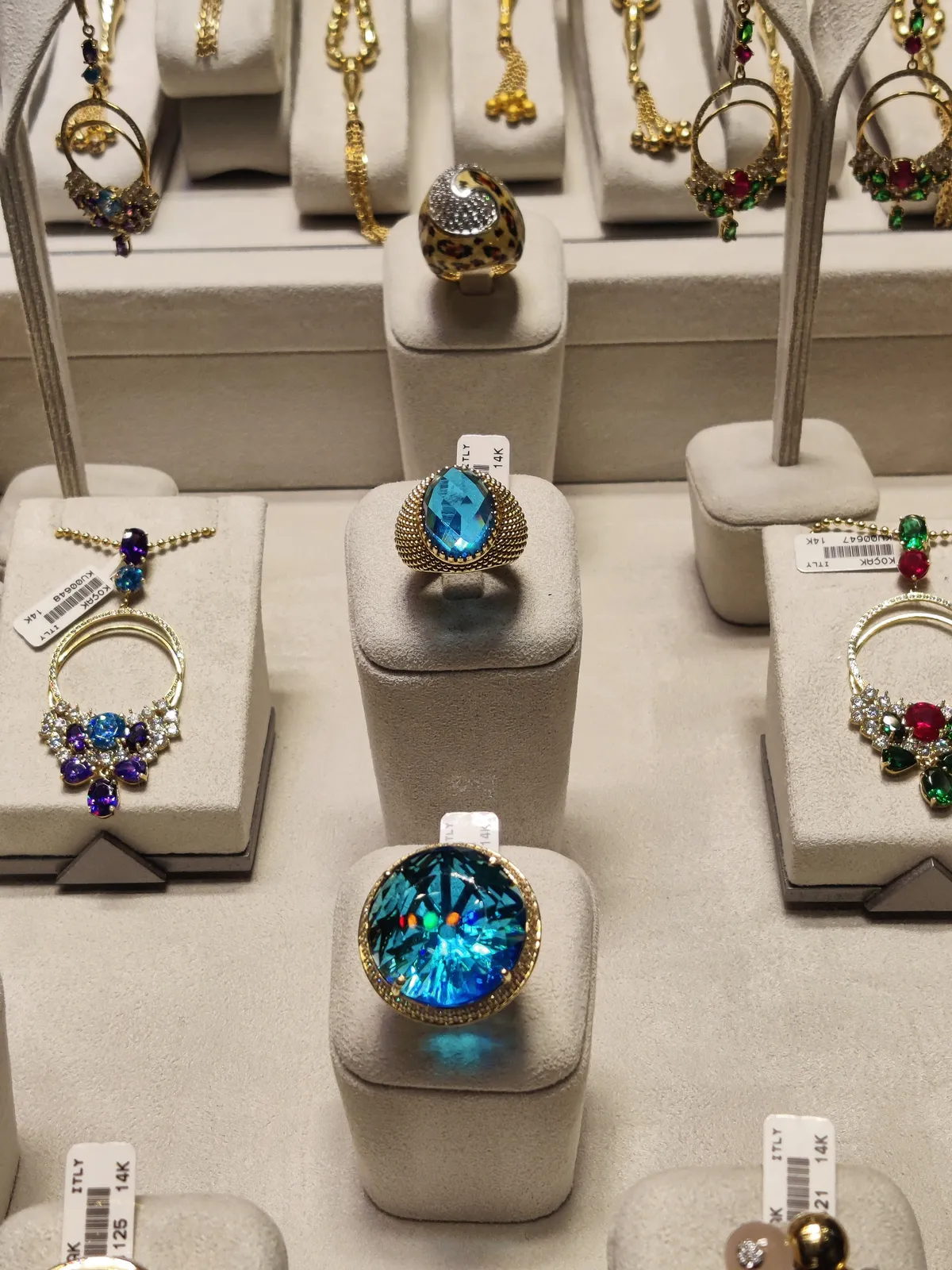
Paraiba tourmaline jewelry is one of the few gem categories where the price tag usually makes sense the moment you see a great stone in real life. I’m Zak, the founder of Quantum Qarat here in Phoenix, and if you’re shopping (or dreaming) in this lane, you deserve the straight, practical version: what you’re paying for, what actually moves the price, and how to buy without getting talked into something that looks good only under showroom lights.
I work with colored stones every day, and Paraiba still stops people mid-sentence. Not because it’s “sparkly.” It’s because the color has that lit-from-within look that photos struggle to capture. If you’re considering a ring, pendant, or earrings, let’s walk through the why behind the cost, plus how to make smart choices on the stone and the setting.
What Paraiba Tourmaline Jewelry Actually Is (and What It Isn’t)
Paraiba tourmaline is a tourmaline variety known for vivid blue to green hues that can read as neon. The classic story starts in Brazil in the late 1980s, when copper-bearing tourmaline from Paraíba hit the market and basically rewrote the colored stone playbook.
That “Paraiba look” is tied to chemistry. Copper (often with a little manganese) influences the color in a way that gives the gem its signature intensity. If you want a deeper gemology explanation without getting lost in textbook speak, the International Gem Society lays it out clearly in their overview, and it’s worth a few minutes of your time before you start comparing stones online. You can read it here: International Gem Society: Paraiba Tourmaline.
One thing I’ll add from the bench: “Paraiba” gets used loosely in casual conversation. In the trade, what matters is whether the stone is a copper-bearing tourmaline in the Paraiba color range, and whether a reputable lab backs that up.
Why Paraiba Tourmaline Jewelry Looks Like It’s Glowing
Most gems win you over by reflecting light back at you. Fine Paraiba does something slightly different: it keeps looking bright even when the lighting is not doing it any favors. When you see a top color, you’ll notice it across the room, not just under a spotlight.
When you’re asking what makes paraiba tourmaline valuable, color is the first checkpoint. Not size. Not clarity. Color. A smaller stone with electric saturation often looks more impressive than a larger one that’s a little sleepy or grayish.
- Most desirable colors: vivid neon blue, electric turquoise, and saturated blue-green
- What you want to avoid: overly dark stones, washed-out “pool water” tones, or stones that only look good under one type of light
- Real-world tip: ask for videos in daylight and indoor lighting, not just a single glamour shot
What Makes Paraiba Tourmaline Jewelry So Expensive: Rarity, Not Just Popularity
Paraiba isn’t expensive because it’s trendy. It’s expensive because the natural recipe is rare, and the original supply story is tight. The early Brazilian material that put Paraiba on the map is extremely limited, and truly fine stones are hard to replace once they’re sold.
Yes, copper-bearing tourmaline has been found outside Brazil, especially in Mozambique and Nigeria. That expanded the market, but it didn’t turn Paraiba into an “everyday gemstone.” The overall supply of top-color stones is still thin, and demand is steady.
If you want a straightforward explanation of how scarcity and demand collide in this category, J.R. Dunn has a helpful market-facing overview you can scan before you go down the rabbit hole: J.R. Dunn: Paraiba Tourmalines.
Paraiba Tourmaline Price Per Carat: What You Can Expect
Paraiba tourmaline price swings a lot because the market is picky. Two stones can both be “Paraiba,” but one can be several times the cost of the other based on color brightness, saturation, size, origin, and documentation.
For a grounded range, Llyn Strong Custom Jewelry notes that quality Paraiba can run from a few thousand dollars per carat into the tens of thousands per carat for exceptional stones. Their overview is here: Llyn Strong: Paraiba Tourmaline pricing context.
| Value factor | What you should look for | Why it changes the price |
|---|---|---|
| Color | Neon blue or vivid turquoise with strong brightness | Drives the “glow” effect and collector demand |
| Origin | Brazil (premium), then Mozambique and Nigeria (often more accessible) | Brazil commands the strongest market premium when documented |
| Size | Fine stones over about 3 carats are scarce | Large + vivid is where pricing jumps hard |
| Lab report | Independent confirmation of copper-bearing tourmaline, plus origin when possible | Protects you from vague listings and supports insurance/appraisal |
| Clarity | Eye-clean is great, but inclusions are normal | Still matters, but top color can outrank clarity |
One bench-level truth: if you see a big Paraiba with killer color priced like a mid-range sapphire, it’s time to slow down and ask questions. That mismatch is where buyers get burned.
Brazil vs Mozambique vs Nigeria: How Origin Affects Paraiba Tourmaline Jewelry Value
Origin can change value a lot, even when two stones look similar on a screen. Brazilian stones with credible documentation typically pull the highest prices. Mozambique and Nigerian stones can still be genuine copper-bearing tourmaline in the Paraiba color range, and many are absolutely stunning in person.
Here’s how I guide you when you’re deciding:
- If you want maximum glow for your budget: you may get more visual punch in Mozambique material, especially in smaller to mid sizes.
- If you care about collector premiums: you’ll usually lean Brazil, and paperwork matters a ton.
- If you want an heirloom you’ll wear a lot: I focus on color you love, a durable design, and documentation that makes future appraisals painless.
Designing Paraiba Tourmaline Jewelry: Settings That Keep It Safe
Paraiba tourmaline sits around 7 to 7.5 on the Mohs scale, which is solid for jewelry, but it’s not “set it and forget it.” Edges can chip if a ring takes a hit, and because the stone itself is valuable, the setting has to be built like it means it.
My bias is toward protective design that still looks clean. Bezels, halos, and thoughtfully engineered prongs do a better job than delicate, airy settings that leave corners hanging out.
If you’re considering a one-of-one build, you’ll get the best result when the setting is designed around the exact stone dimensions. That’s a big part of how we work at Quantum Qarat, and you can see our process here: Custom Jewelry at Quantum Qarat.
- For rings: bezel or semi-bezel, halos, low-profile builds, and sturdy bands that reduce snagging
- For earrings: studs or compact drops that keep the stone balanced and protected
- For pendants: bezel or partial bezel that protects the girdle while letting light in
How I’d Buy Paraiba Tourmaline Jewelry If I Were You (No Regrets Edition)
When a stone is rare and pricey, it’s easy to talk yourself into “good enough.” That’s usually where regret shows up later. If you want a checklist that keeps you honest, this is mine.
- Chase color first. If it doesn’t look bright in more than one lighting condition, keep shopping.
- Get real about size. Big fine Paraibas exist, but the pricing curve gets wild fast.
- Ask for a lab report. Especially online. “Paraiba color” isn’t the same as documented copper-bearing tourmaline.
- Pick a protective setting. Repairing a damaged setting is one thing. Replacing a rare stone is another story.
- Don’t ignore your lifestyle. If you work with your hands a lot, you may want a lower profile ring or move the Paraiba to earrings or a pendant.
If you’re eyeing Paraiba for a ring, you might also want to compare metal choices and everyday durability. I laid out practical options on our engagement and wedding page: Engagement & Wedding at Quantum Qarat.
Care and Cleaning: Keep Your Paraiba Looking Bright
Paraiba doesn’t need fussy routines, just consistent, sensible care. At home, use mild soap, warm water, and a soft brush. Rinse well and pat dry. Keep it away from harsh chemicals, and be cautious with ultrasonic cleaners unless a jeweler has inspected the stone first. Inclusions and tiny fractures can make some stones more vulnerable than they look.
For rings, I’m a big fan of quick inspections. If a prong starts snagging or the stone feels “different,” stop wearing it and get it checked. If you’ve ever had a stone come loose, you already know how fast that can turn into a bad day. I wrote a step-by-step guide for that exact situation here: Help: a diamond fell out of my ring.
Is Paraiba Tourmaline Jewelry Worth the Price?
Sometimes yes, sometimes no, and it depends on what you mean by “worth.” If you want a gem with a look that’s instantly recognizable, Paraiba is hard to beat. If you want the best value per carat on paper, Paraiba may frustrate you because the market rewards a very narrow band of top color.
If you’re thinking about long-term value, it helps to understand the difference between what a piece appraises for and what it might sell for later. I broke that down in plain language here: Jewelry appraised vs resale value.
My honest take: buy Paraiba because you love the color and you want something uncommon on your hand, neck, or ears. If the stone makes you pause every time you look at it, you’re on the right track.
FAQ: Paraiba Tourmaline Jewelry
Why is Paraiba tourmaline jewelry so expensive?
You’re paying for a rare color effect, limited supply of top-quality material, and strong demand. Fine neon stones can command premium pricing even when they have visible inclusions.
What makes Paraiba tourmaline valuable compared to other blue gemstones?
The copper-driven neon look is the difference. Plenty of gems are blue. Very few keep that bright, almost luminous color across different lighting.
What is a realistic Paraiba tourmaline price per carat?
Expect a wide span. A few thousand dollars per carat can be normal for decent quality, while exceptional stones can reach tens of thousands per carat, especially as size and color quality climb.
Is Paraiba durable enough for an engagement ring?
Yes, with smart design. I recommend protective settings, a lower profile when possible, and routine inspections so the stone stays secure.
Should you buy one larger Paraiba or several small ones?
If you love the look but want to manage budget, a cluster of smaller stones can be a killer design choice. Larger fine stones get rare quickly, and the per-carat price can jump fast.
Final Thoughts on Paraiba Tourmaline Jewelry (and What I’d Do Next)
Paraiba tourmaline jewelry costs what it costs because the best examples are genuinely scarce, visually unique, and hard to replace. If you focus on color, insist on documentation, and choose a setting that protects the stone, you can end up with a piece that feels special every time you put it on.
If you want help sourcing a stone and building a setting that fits your life, take a look around Quantum Qarat and reach out when you’re ready. I’ll walk you through options without the salesy nonsense. Also, if you spot a listing that seems too good to be true, send it over. I’m happy to sanity-check it with you.