
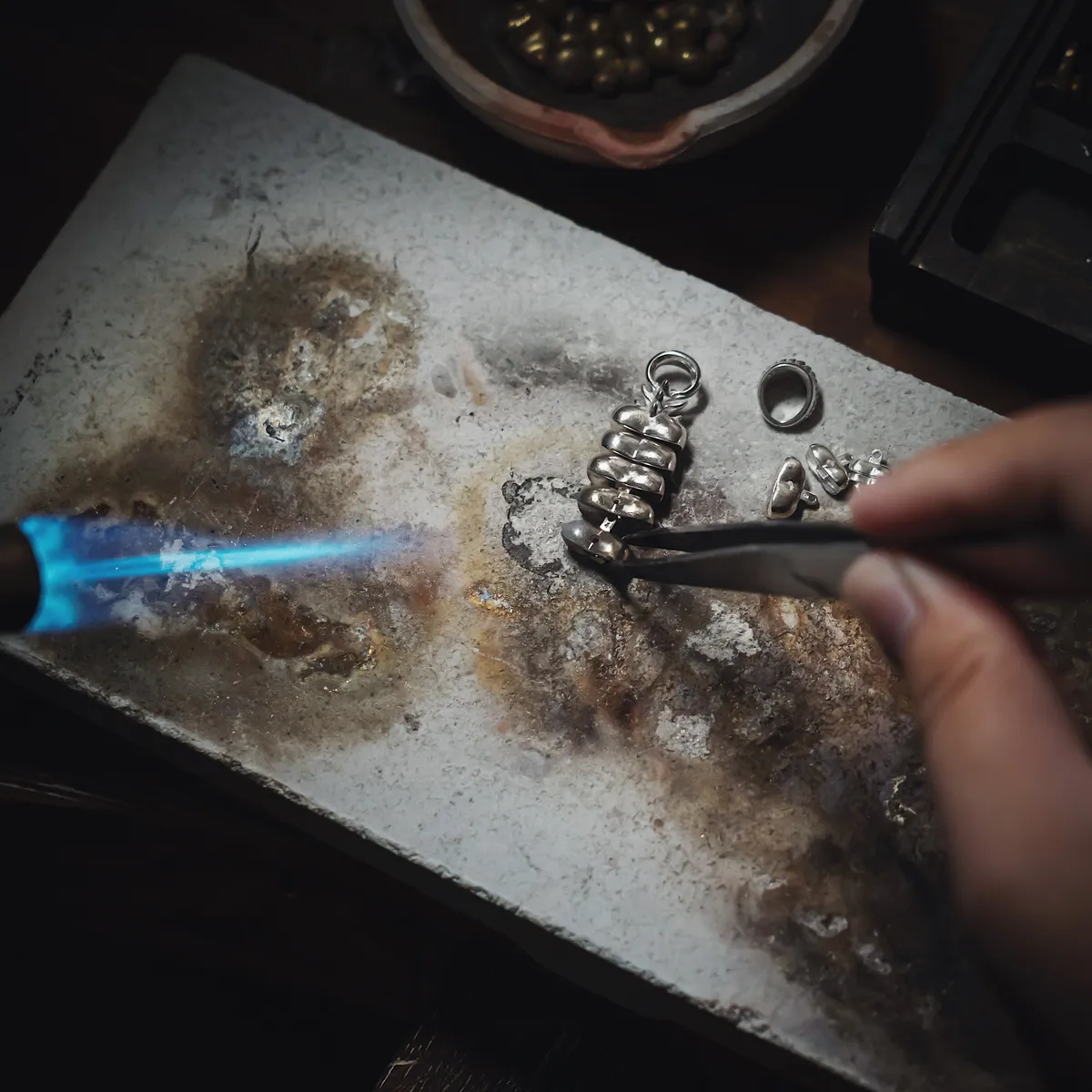
Ring soldering explained: if you’re wearing an engagement ring and a wedding band and they keep doing that little two-ring shuffle on your finger, you’re probably wondering if you should just join them and be done with it. I’m Zak, founder of Quantum Qarat here in Phoenix, and this is one of those choices that seems small until you live with it every day.
Here’s the goal of this post: help you decide with a clear head. I’ll walk you through what soldering actually means at the bench, when it’s a smart move, when you should hold off, and a few alternatives if you want stability without the “forever” part.
Ring soldering explained: what I’m doing at the bench (and what I’m not)
When I solder rings, I’m permanently joining two rings so they wear as one unit, most commonly your engagement ring and your wedding band. The connection is usually made at the bottom of the shank, the part that sits in your palm, because it’s discreet and doesn’t interfere with the design up top.
At a practical level, it’s controlled heat, flux, and a compatible solder that bonds the metals. Done right, you don’t see a clunky blob, you don’t lose the details you paid for, and the rings stay aligned like they were born together.
What soldering is not: it’s not a magic fix for a ring that doesn’t fit. If your engagement ring spins because the shank is too wide for your finger, or your band won’t sit flush because the setting is low and the band is straight, we should address that first. Otherwise you’re just locking in a problem.
Should you solder rings together? The benefits you’ll notice on a random Tuesday
When you ask me, “should you solder rings together?” I usually flip it to: what’s annoying you right now. Most people aren’t chasing perfection, they’re chasing a set that behaves.
- They stop drifting apart: One set, one orientation. Your center stone stays centered, and your band doesn’t wander off and start leaning into it.
- Less metal-on-metal wear: Two separate rings rubbing day after day can wear grooves where they touch. Ben Garelick Jewelers breaks down that long-term friction issue well, especially for daily wearers, at their guide on when to solder wedding rings.
- It can feel more comfortable: A joined set often feels smoother because you’re not constantly feeling the rings shift against each other.
- A cleaner look in real life and in photos: If you love symmetry, soldering can keep the “top view” of your set looking intentional.
One more benefit people don’t expect: once the set moves as one, you tend to stop fiddling with it. Less twisting means fewer surprise snags on pockets, hair, or gloves. It’s not scientific, it’s just human behavior.
When to solder engagement ring to wedding band (and when I tell you to wait)
If you’re deciding when to solder engagement ring to wedding band, I’m going to say something that sounds boring but saves regrets: wear them together for a bit first. A few weeks is good. A couple months is better. Your hands change with heat, travel, workouts, salty foods, all of it.
I tend to recommend soldering when:
- Your rings constantly separate or twist, and it’s not just once in a while.
- You’re seeing wear marks where the two rings touch.
- You wear both rings basically every day and you never reach for “just the band.”
- Your engagement ring is a bit higher set and you want predictable alignment so it doesn’t feel like it’s trying to lean.
I usually suggest waiting, or choosing a different approach, when:
- You like wearing only your wedding band for the gym, travel, cooking, or work.
- You expect finger size changes in the next year or two. Pregnancy, medications, health stuff, weight shifts. Life happens.
- Your rings are different metals or finishes and you care about keeping that contrast crisp.
If you want a solid “big picture” overview of pros and cons from a jeweler’s standpoint, Brinker's Jewelers lays it out clearly at their soldering pros and cons article.
Ring soldering explained: the trade-offs you should be okay with
Joining your rings is super practical, but you are trading flexibility for convenience. I’d rather you feel informed than talked into it.
- It’s “permanent-ish”: A good jeweler can separate soldered rings, but it’s extra labor and it can involve refinishing. Blue Nile also frames soldering as a long-term commitment, and I agree with that approach at their ring soldering explainer.
- Resizing gets more involved: Sometimes we resize the set as a unit. Sometimes the cleanest way is to separate, size, and re-solder.
- Some designs need extra caution: Eternity bands, stones set low near the base, and intricate details can change the plan.
And here’s a small, real-world note: if you’re the type who likes switching stacks, wearing a plain band one day and a sparkly band the next, soldering will feel restrictive. If you’re a “same rings, every day” person, it often feels like relief.
Quick decision table: should you solder rings together?
| What you’re dealing with | What I usually recommend | Why |
|---|---|---|
| Rings spin, separate, or misalign daily | Soldering is usually a great fit | Improves alignment, comfort, and consistency |
| You remove your engagement ring often | Hold off | You’ll want the option to wear just the band |
| Visible wear where rings rub | Consider soldering sooner | Reduces long-term metal loss at contact points |
| Finger size may change soon | Wait | Resizing a soldered set is more complex |
| Mixed metals or contrasting finishes | Get a bench consult first | Seam visibility and refinishing can vary by metal |
Alternatives to soldering if you want alignment without commitment
You’ve got options. Sometimes you don’t need solder at all, you just need the set to fit and nest correctly.
- Dial in the fit: A small resize, sizing beads, or a subtle adjustment can cut down spinning without joining the rings.
- Custom band that actually matches: If your band was bought separately and it “fights” your engagement ring’s shape, a contoured or notched band can solve the gap and the drifting. If you want to see how I build that kind of piece from sketch to final polish, start here: Custom Jewelry at Quantum Qarat.
- A guard or wrap: Some wraps stabilize the set while still being removable, which is handy if you like switching it up.
If you’re still in the “what style even makes sense for us?” phase, my engagement and wedding hub is a good place to browse and plan: Engagement and Wedding.
What the soldering process looks like in my shop
Here’s what you can expect when I solder a set in the studio. First, I inspect both rings for wear, thin spots, loose stones, and prior repairs. If anything feels questionable, we handle that before we add heat and lock the rings together.
Next, I align the rings the way you actually wear them. Sounds obvious, but it’s important. People often assume the “perfect” alignment is straight-on, then realize they prefer the band shifted a hair for comfort. This is where talking through your day-to-day habits really matters.
Then I protect what needs protecting and solder at the base. After that comes cleanup, smoothing, polishing, and making sure the seam is neat. The best compliment I can get is when you can’t tell where the join is unless you’re looking for it.
If you’ve ever had a stone loosen up, don’t ignore it before any repair or solder work. I wrote a practical step-by-step on what to do when a diamond falls out right here: Help, a diamond fell out of my ring: what to do now.
Care tips after soldering (simple stuff that keeps it looking sharp)
Once the set is joined, upkeep is pretty straightforward. The main thing is remembering that you’re wearing one larger piece now, so it’s worth checking comfort and fit as seasons change.
- Clean gently: Warm water, mild soap, soft brush. Rinse well.
- Skip harsh chemicals: Bleach and strong cleaners are not your ring’s friends.
- Get it inspected: If you wear your rings daily, aim for a check once or twice a year so prongs and settings stay secure.
- Store it smart: Keep it away from other jewelry that can scratch it up.
If you wear white gold and you’re wondering about plating schedules and “why it looks a little warmer lately,” my rhodium vs platinum breakdown is a helpful read: Rhodium vs. Platinum: the ultimate white metal showdown. Fair warning, I get a little nerdy in that one.
FAQ: Ring soldering explained (the questions you actually ask me)
Is soldering my rings together safe for diamonds?
Usually, yes, with the right precautions. I look at how close stones are to the heat, the type of setting, and whether any gems are more heat-sensitive. If the risk is too high, I’ll steer you toward a different solution.
Can soldering fix a gap between my engagement ring and band?
It can reduce the shifting that makes gaps look worse, but it won’t change the geometry of your setting. If the band physically can’t sit flush, you may need a contoured band or a custom match instead.
How long should I wait after the wedding to solder my rings?
A few weeks at minimum. A couple months is ideal. You want enough real-life wear time to know if you ever want to separate them for certain days.
Can a soldered set be resized later?
Yes, but it depends on the design. Sometimes we resize as a single unit. Other times the cleanest approach is to separate, resize, and re-solder so alignment stays perfect.
What if my engagement ring and wedding band are different metals?
Mixed metals can sometimes be soldered, but it’s not automatic. The seam may be more noticeable and refinishing can be trickier, so I always recommend a bench evaluation first.
Conclusion: join them if you want simplicity, keep them separate if you want options
If you want your set to feel like one smooth, dependable piece, soldering is often the cleanest solution. If you value flexibility, expect sizing changes, or like wearing just your band sometimes, keeping them separate makes more sense. Either way, the “right” answer is the one that fits your actual routine, not what looks best in a ring box photo.
If you want me to take a look at your specific set, you can book an in-person or virtual consult here: Appointments. Bring your questions, bring your quirks, and yes, bring the rings that won’t stop misbehaving.