
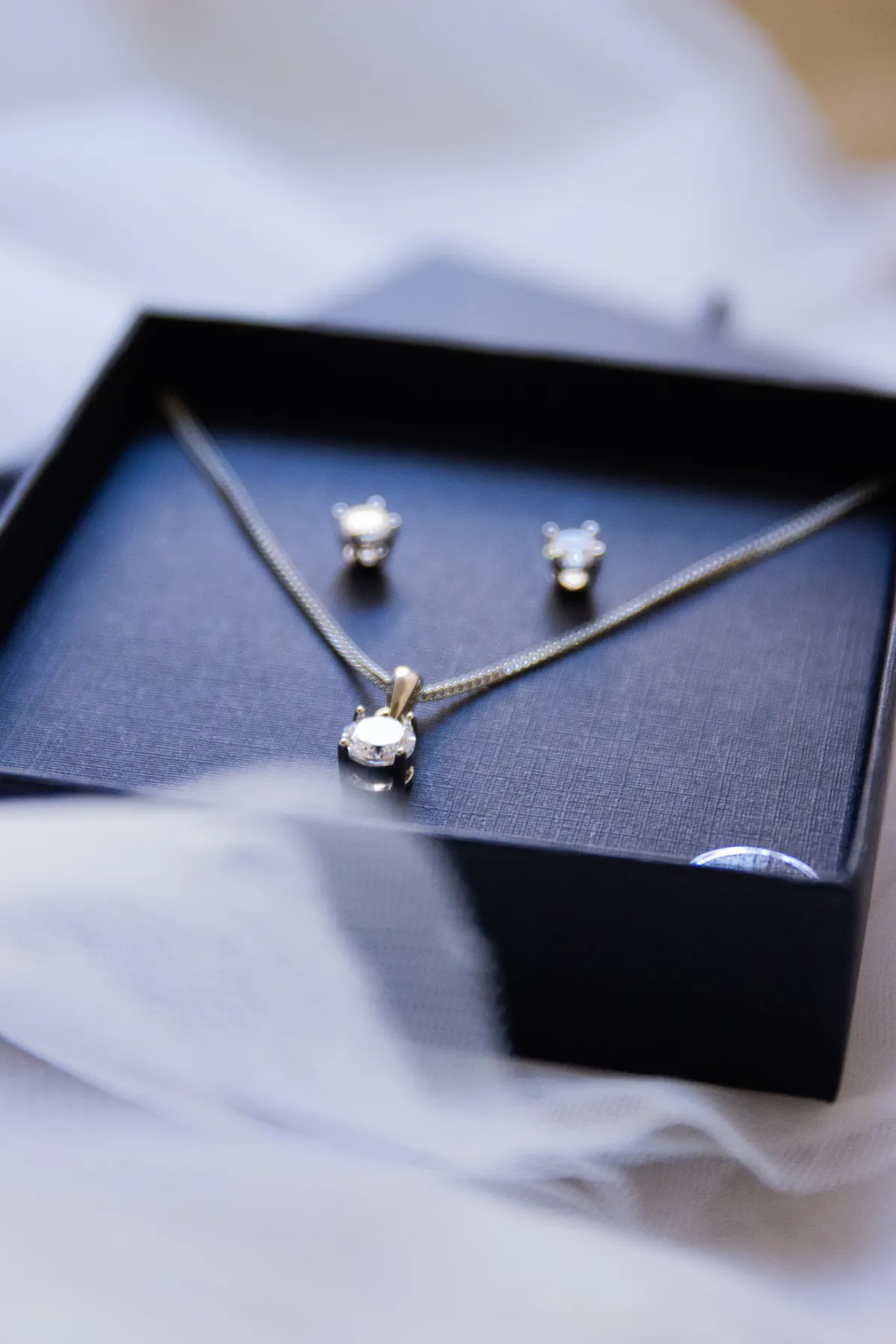
Prong types explained is one of those topics that sounds small until you’re wearing the ring every day and you realize the “tiny claws” are doing a whole lot of work. I’m Zak, the founder of Quantum Qarat here in Phoenix, and when you’re building a custom ring with me, prongs are never a last-minute checkbox. They change how the stone looks from across the room, how it feels on your hand, and how well it survives the little bumps that happen when you’re just living your life.
So let’s talk about the four prong styles I get asked about most: round, claw, V-prong, and double-claw. I’ll keep it practical, and I’ll tell you how I think about these choices at the bench.
Prong types explained: what prongs actually do in real life
Prongs are the small metal arms that hold your stone at specific contact points. A good prong job is a bit of a balancing act: you want the prongs to stay out of the way visually, but you also want enough metal in the right places so the stone doesn’t loosen over time.
When you’re deciding on a prong style, I’m usually looking at four things:
- Security: the stone should not shift, rattle, or “click” with normal wear.
- Protection: corners and points are the first places to chip, so they need smart coverage.
- Comfort: if it’s sharp or snaggy, you’ll notice it constantly.
- Proportion: prongs should complement the stone, not dominate it.
Most rings use four or six prongs, and the style of the tip changes the vibe more than people expect. Two rings can look nearly identical in photos, then feel totally different the first week you wear them.
Round prongs: classic, comfortable, and hard to hate
Round prongs (sometimes called button prongs) are the “quiet” choice in the best way. The tips are smooth and rounded, so you don’t get that sharp edge feeling when you run your finger across the setting. If you want the diamond to do all the talking, round prongs usually stay in their lane.
I’ll often steer you toward round prongs if:
- You want a timeless look that won’t feel dated in ten years.
- You’re rougher on jewelry, or you’re in and out of sweaters, gloves, gym bags, hair, and pockets.
- Your stone shape doesn’t have super fragile corners, like many cushions and radiants.
In the claw prong vs round prong debate, round prongs tend to be the friendlier daily-wear option. They can also look really cohesive in yellow gold, where a softer tip matches that warm metal color nicely.
The trade-off is simple: round prongs often look a touch “heavier” than claws, and they don’t always reach quite as far onto the crown. If you’re setting a bigger stone, the fix isn’t automatically switching styles. Sometimes it’s adjusting prong placement, using a slightly different head design, or going from four prongs to six for extra redundancy.
Claw prongs: the clean, crisp choice (when they’re finished right)
Claw prongs taper to a defined point. When they’re done well, they look refined and intentional. They also photograph beautifully, which is why you see them all over close-up ring shots.
From a practical angle, claw prongs can feel more “locked in” because the tip can extend a little farther onto the stone’s crown. If you like that sleek profile, and you want the prongs to visually disappear, claws are a solid pick.
I see claw prongs work especially well on elongated stones like ovals, pears, and marquise cuts, because the tapered prong echoes the shape. If you want a deeper overview of how prong styles change both the look and the hold, I generally agree with the way VRAI explains engagement ring prong styles in their guide.
Here’s the part I’m picky about: claws can snag if the tips are left too pointy or too tall. That’s not a “claw prongs are bad” problem, it’s a finishing problem. At my bench, I keep the claw look but soften the very top edge so it behaves better in everyday wear. If you want another perspective on snagging and wear, Gem Breakfast has a solid prong-setting overview that calls out the same issue.
Prong types explained for pointy stones: why a V prong setting matters
If your stone has sharp corners or a true point, this is where I get firm with you in the nicest way possible. A v prong setting isn’t just a style choice. It’s protection.
V-prongs wrap around a corner or point like a little seatbelt. They’re common on princess cuts (those crisp corners), pears and marquise tips, hearts, and a lot of the more angular modern cuts like kites and shields.
Corner chips happen fast. One bad hit on a countertop edge and you can lose a tiny sliver. Sometimes it’s repairable, sometimes it changes the outline enough that you’ll always see it. That’s why I treat corner protection as non-negotiable when the stone calls for it. If you like learning the “why” behind these decisions, LaBijouterieSF breaks down prong types and stone protection clearly.
You can also mix prong styles. For example, you might use V-prongs only on the points of a marquise, then use round or claw prongs everywhere else. Custom is nice like that. You don’t have to choose one setting rule for the whole ring.
Prong types explained with extra detail: double-claw prongs
Double-claw prongs (also called split or twin prongs) divide into two tips at the top. They add a sharp, architectural detail that makes a solitaire feel more “designer” without changing the center stone.
People often ask me if double-claws are automatically twice as secure. Honest answer: not necessarily. You do get more visible contact points, and you can engineer them with great coverage, but security still comes down to fit, thickness, and the quality of the setting work.
I usually recommend double-claws when you want:
- More texture and detail up close
- A modern look that still feels classic enough to wear forever
- A prong style that visually frames the stone (especially on ovals)
| Prong type | Best for | Overall look | What to watch for |
|---|---|---|---|
| Round | Everyday wear, classic solitaires, cushions, radiants | Soft, timeless, low-fuss | On larger stones, may need careful proportions or six prongs |
| Claw | Ovals, pears, marquise, refined modern or vintage-inspired designs | Sleek, precise, “light” on the stone | Can snag if the tips are left too sharp |
| V-prong | Princess corners, pointed tips, heart shapes, angular cuts | Protective, geometric | Needs a tight fit and clean symmetry to look intentional |
| Double-claw | Statement solitaires, modern detail lovers, ovals and elongated stones | High-detail, architectural | More intricate to repair if damaged, so maintenance matters |
Claw prong vs round prong: how I help you pick in the studio
If you’re stuck between claws and rounds, I’ll usually ask you a few questions and we narrow it down fast.
- How do you use your hands? If you’re constantly in fabric, hair, or gloves, round prongs are often the easiest to live with.
- Do you want “soft and classic” or “crisp and defined”? Round prongs read softer. Claw prongs read sharper and more tailored.
- What’s the stone size and setting height? Taller settings and larger stones get more leverage when bumped. Sometimes the best upgrade isn’t the tip style, it’s switching to six prongs.
- What shape is your stone? Ovals, pears, and marquise often look amazing with claw or double-claw because the lines match the silhouette.
I also think ahead to the “ten years from now” version of your ring. I want your prongs to be serviceable, meaning you can retip or tighten them down the road without reinventing the whole setting. That part isn’t sexy, but it’s the difference between a ring you baby and a ring you actually wear.
Prong maintenance: quick checks that save you headaches
Prongs wear down. Even the best ones. If you wear your ring daily, plan on getting it checked regularly. I’m not trying to scare you, it’s just normal ownership, like rotating tires. Ignore it long enough and the wear compounds.
Here are the signs I want you to take seriously:
- Your stone shifts or makes a faint tick sound when you tap the ring near your ear.
- One prong looks thinner, flatter, or shorter than the others.
- You keep snagging the same spot, especially after a hard bump.
- You can see daylight between the prong and the stone where there used to be contact.
If you ever have that awful moment where a stone falls out, move quickly and keep the ring safe. I put together a straightforward checklist here: Help! A Diamond Fell Out of My Ring, What to Do Now. (And yes, it happens to careful people too.)
How I build prongs into a custom Quantum Qarat ring
When you’re designing with me, we start with your stone, your style, and how you actually live. Then we choose a prong style and layout that fits the design, and I fine-tune the details that people don’t notice until they wear the ring: height, thickness, how the tips are finished, and how the prongs flow into the head.
If you’re early in the process, you can see the kinds of pieces we build and how we think about durability on our Engagement and Wedding Jewelry page.
If you already own a ring and you’re thinking, “These prongs make me nervous,” that’s fixable. Resets, retipping, reinforcement, and repairs are part of what I do, and you can read more about that on our services page.
And if you’re comparing custom jewelers, I wrote this for you because I’ve been on both sides of the counter: Top 10 Questions to Ask Before Picking a Custom Jeweler.
FAQ: prong types explained
Are claw prongs more secure than round prongs?
They can feel more secure because they often reach farther onto the crown, but security mostly comes from correct fit, good metal thickness, and clean finishing. A well-made round prong can outperform a sloppy claw setup.
When is a v prong setting necessary?
Whenever your stone has a corner or point that’s vulnerable to chipping, I strongly prefer V-prongs. Princess corners and marquise tips are the common ones, but pears, hearts, and angular custom cuts can benefit too.
Do double-claw prongs make a ring safer?
Not automatically. They add visible contact points and can be engineered to be very protective, but they also add complexity. The real safety comes down to workmanship and routine checks.
Is four prongs or six prongs better?
Four prongs can feel more open and show more of the stone. Six prongs give you redundancy, which I like for larger stones, higher settings, or anyone who wants maximum peace of mind.
How often should I have my prongs checked?
If you wear your ring most days, I recommend every 6 to 12 months, plus any time you smack it hard on something. It’s a quick visit that can save you a major repair later.
Conclusion: pick prongs like you’re planning to wear the ring, not just photograph it
With these prong types explained, you can look at a ring and understand what those little details are doing. Round prongs keep things classic and comfy. Claw and double-claw prongs bring that crisp, refined look (as long as they’re finished right). And if your stone has corners or points, a V-prong is the practical choice that protects what you paid for.
If you want help choosing the right prongs for your diamond, or you’re ready to rebuild a setting that doesn’t feel secure, reach out through Quantum Qarat. I’ll walk you through options, show you what I’m seeing, and we’ll land on a design that looks good today and still makes sense years from now. Also, I’ll be real with you about what I’d do if it were my ring, because that’s the whole point.