
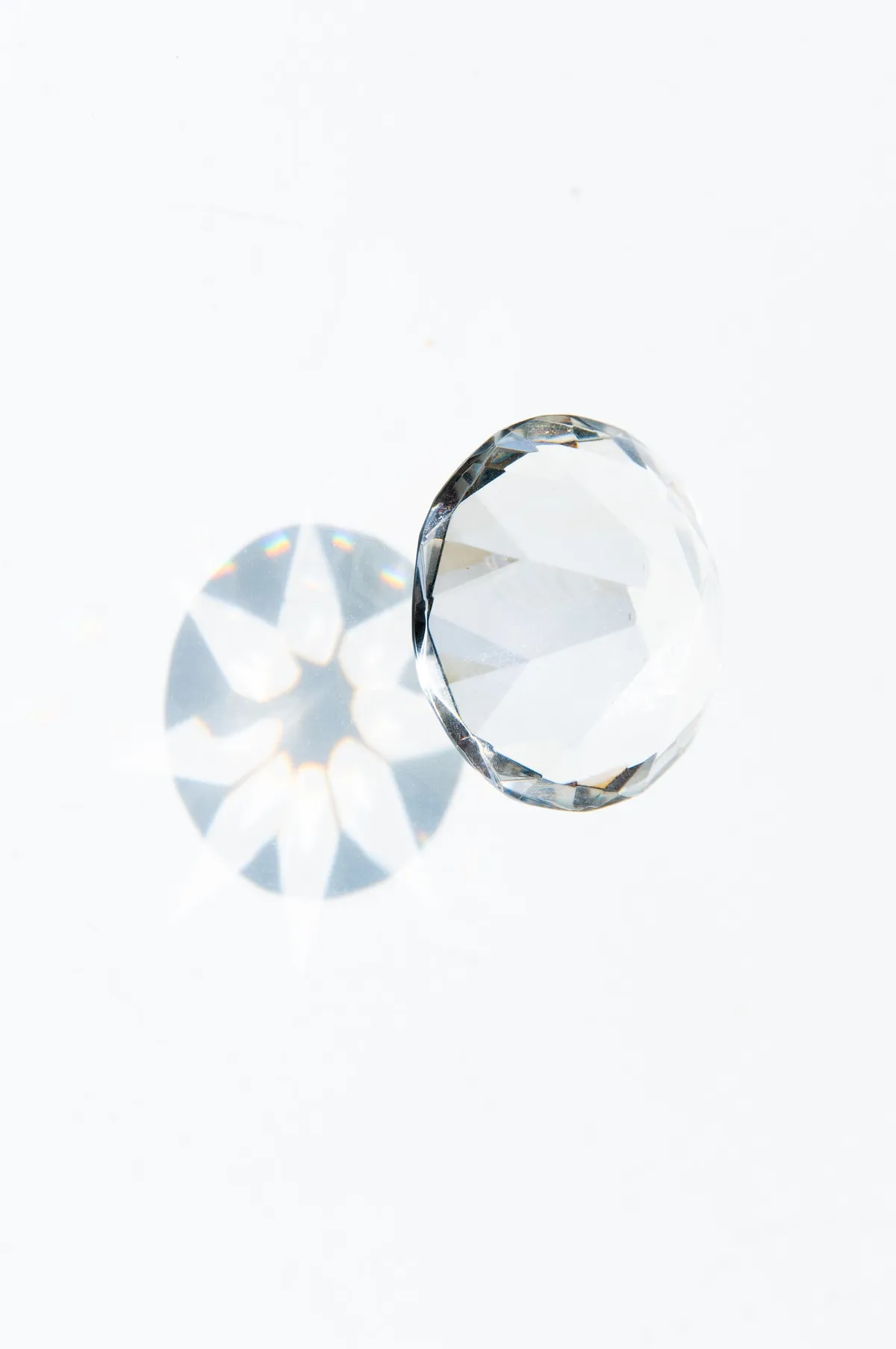
Reclaimed diamonds vs lab grown comes up almost every time you start looking at “sustainable” engagement rings with me. I’m the guy behind Quantum Qarat here in Phoenix, and I’ll be honest: I like this question because it tells me you’re not just shopping for sparkle. You’re shopping for a choice you can stand behind five, ten, twenty years from now.
If you already know you want something made from scratch, take a look at how I work on the Custom Jewelry page. If you’re still sorting out the diamond side of the puzzle, keep reading and I’ll help you compare these two paths in plain English.
Reclaimed diamonds vs lab grown: what you’re actually buying
Let’s clear the air first, because the terms get tossed around like everyone’s supposed to know what they mean.
A reclaimed (recycled) diamond is a natural diamond that was already set in jewelry at some point. It might come from an estate piece, a trade-in, an old ring that got redesigned, or a vintage setting that didn’t survive but the diamond did. The important part is this: the stone is already in circulation.
A lab-grown diamond is also a real diamond, just created in a controlled environment instead of mined. Most are grown with HPHT or CVD methods, then cut and graded like any other diamond.
So you’re not deciding between “real” and “fake.” You’re deciding between two different origin stories and two different supply chains.
What a reclaimed diamond engagement ring feels like in real life
When you choose a reclaimed diamond engagement ring, you’re basically saying: “Use what already exists.” The environmental heavy lifting happened years ago. Today, the work is cleaning, re-cutting if needed, and giving that diamond a new home.
That’s why reclaimed stones are often the simplest sustainability win. You’re not asking the world for a new diamond. You’re keeping an existing one in use, which lines up with the circular-economy idea. If you want a quick explainer on why recycled diamonds don’t require new mining inputs, myGemma lays it out clearly on their recycled diamond guide at mygemmas.com.
One thing I hear a lot is, “Is a reclaimed diamond lower quality?” Nope. Diamonds don’t wear out the way softer gemstones can. If it’s chipped or abraded, we’ll see it, talk about it, and either pass or plan around it. And if water usage is part of your sustainability compass, Frank Darling has a good overview of why recycled diamonds avoid additional water consumption at frankdarling.com.
Lab-grown diamonds: a clean look, with a little nuance
Lab-grown diamonds are popular for a reason. If you want a very specific look, a certain shape, a certain size, a tight color range, lab-grown inventory can make that easy. It’s also a straightforward way to avoid many of the human-rights concerns people associate with certain mining regions.
Where it gets a bit more complicated is the sustainability conversation. Growing diamonds takes energy. Some growers run on renewables, some don’t, and the footprint changes a lot depending on the electricity source. CNBC covered how quickly lab-grown has moved into the mainstream, along with the energy debate, in this report at cnbc.com.
My take as a jeweler: lab-grown can be a responsible choice, but it’s worth asking a couple questions instead of assuming every lab-grown stone is automatically “green.”
Reclaimed diamonds vs lab grown: environmental impact without the fluff
If your top priority is minimizing new impact, reclaimed typically wins. There’s no new mining and no new diamond growth process. You’re reusing a stone that is already here.
Ringed PDX sums up the contrast well, especially the “no new extraction” angle for reclaimed diamonds, on their sustainability overview at ringedpdx.com.
Lab-grown can still be a smart move, particularly when you can verify renewable energy use. If you’re leaning that way, I’ll help you ask the right questions so you’re not buying a vibe, you’re buying a verifiable footprint.
Reclaimed diamonds vs lab grown: price, value, and what you get for your money
This part matters, because your budget is not a moral failing. It’s just reality.
Lab-grown diamonds are usually less expensive at the same carat weight and apparent quality. That can free up cash for the parts of the ring you’ll actually interact with every day: a stronger setting, better finishing, a more comfortable fit, or small design details that make it feel like yours.
Reclaimed diamonds can be priced all over the map. The market is based on what’s available and that includes antique cuts, weirdly charming proportions, and stones with a little personality. Sometimes that means deals, sometimes it means hunting. Marilyn Brogan Jewelry has a nice perspective on why recycled and antique diamonds can be a compelling way to get natural diamonds without new mining demand at marilynbroganjewelry.com.
In the studio, I’ll usually ask you two questions right away: What’s your target budget range, and what do you want to prioritize, size, rarity, or story? Your answer narrows the best option fast.
Sourcing and design: which option is easier to find?
If you want the simplest sourcing experience, lab-grown wins on logistics.
- If you want a very specific spec like a 1.80 carat oval, near-colorless, eye-clean, lab-grown is usually quick.
- If you want a reclaimed stone, you’re searching a finite pool. It can be fast, or it can take some patience.
Here’s the fun part though: reclaimed diamonds often nudge you into a more creative custom design. Instead of forcing the diamond to fit a cookie-cutter setting, you design around what makes that stone special. That’s where custom work starts to feel like custom work.
If you want a deeper primer on how I think about diamonds overall, the Diamond and Diamond Jewelry page is a good place to wander next.
Paperwork and proof: what to verify before you say yes
Whether you pick reclaimed or lab-grown, you should be able to point to documentation. Ideally that means a grading report from a recognized lab, plus clear disclosure about whether the diamond is natural or lab-grown.
With reclaimed diamonds, paperwork can be missing because the stone has had a previous life. That doesn’t mean it’s sketchy, it just means you need a jeweler who knows how to verify what’s in front of them.
Also, yes, lab-grown diamonds can be identified by advanced testing even though they look the same to your eyes. That’s not a knock. It’s simply why transparency matters. I’d rather you feel confident than wonder later.
A quick side-by-side: sustainable diamond options at a glance
| Factor | Reclaimed (Recycled) Diamond | Lab-Grown Diamond |
|---|---|---|
| Origin | Natural diamond that previously lived in jewelry | Grown in a lab (HPHT or CVD) |
| New resource use | Very low (reusing what already exists) | No mining, but energy required for growth |
| Carbon footprint | Often lowest because you’re not creating a new stone | Varies a lot based on electricity source |
| Price | Variable depending on availability and character | Usually lower for equivalent size and grade |
| Inventory consistency | Limited to what’s currently in circulation | Broad selection, easier to match exact specs |
| Best for | People who want maximum circularity and a natural stone | People who want size and precision within a set budget |
Reclaimed diamonds vs lab grown: my simple decision checklist
If you’re stuck, don’t overthink it. Pick your top two priorities and let the rest fall into place.
- Go reclaimed if your number one goal is the lowest new environmental impact and you like the idea of a diamond with some history.
- Go lab-grown if you want the most diamond for the money and you have very specific specs in mind.
- Either is a good “no newly mined” move if you’re mainly trying to step away from fresh extraction.
- If you want lab-grown, ask about energy so you know what you’re supporting.
How I think about “sustainable” when we build your ring
Here’s something people don’t always expect me to say: sustainability is also about how the ring holds up. A ring that’s delicate in the wrong places, or made with a setting that’s constantly snagging, can turn into repairs, stress, and sometimes even lost stones.
I design for your real life. Gym, gloves at work, hiking, desk job, it all changes what I recommend. If you’ve ever had that awful moment where a stone fell out, you already know what I mean. If you want a practical guide, I wrote one here: Help! A Diamond Fell Out of My Ring: What to Do Now.
And if you’re comparing jewelers as well as diamonds, do yourself a favor and read Top 10 Questions to Ask Before Picking a Custom Jeweler. It’ll save you time, and a few headaches.
FAQ: reclaimed diamonds vs lab grown
Are reclaimed diamonds real diamonds?
Yes. They’re natural diamonds that were mined in the past and are now being reused.
Do lab-grown diamonds look different from natural diamonds?
Not to the naked eye. With specialized testing, a gemologist can identify growth patterns and confirm whether a diamond is lab-grown.
Is a reclaimed diamond engagement ring always more sustainable?
Often, yes, because you’re keeping an existing stone in circulation. The tradeoff is selection. You might need to be a bit flexable on exact specs.
Why are lab-grown diamonds cheaper?
Supply is more predictable and production has scaled. That increased availability has pushed prices down over time.
Can you custom design a ring with either option?
Absolutely. I build the design around your stone and your lifestyle. If you want to see how the custom process works step by step, start here: Custom Jewelry.
Conclusion: pick the sustainable diamond that fits your priorities
If you’re weighing reclaimed diamonds vs lab grown, here’s the clean summary I give clients in my chair: reclaimed is the most circular option because you’re reusing a natural stone that already exists. Lab-grown is the most controlled option because you can dial in a precise look and budget with less waiting.
If you want, I can walk you through both choices with real stones, real numbers, and zero pressure. Bring your must-haves, your budget range, and even your Pinterest board. We’ll sort it out together, and you’ll end up with a ring that feels like it was made for you. Not for everyone.