
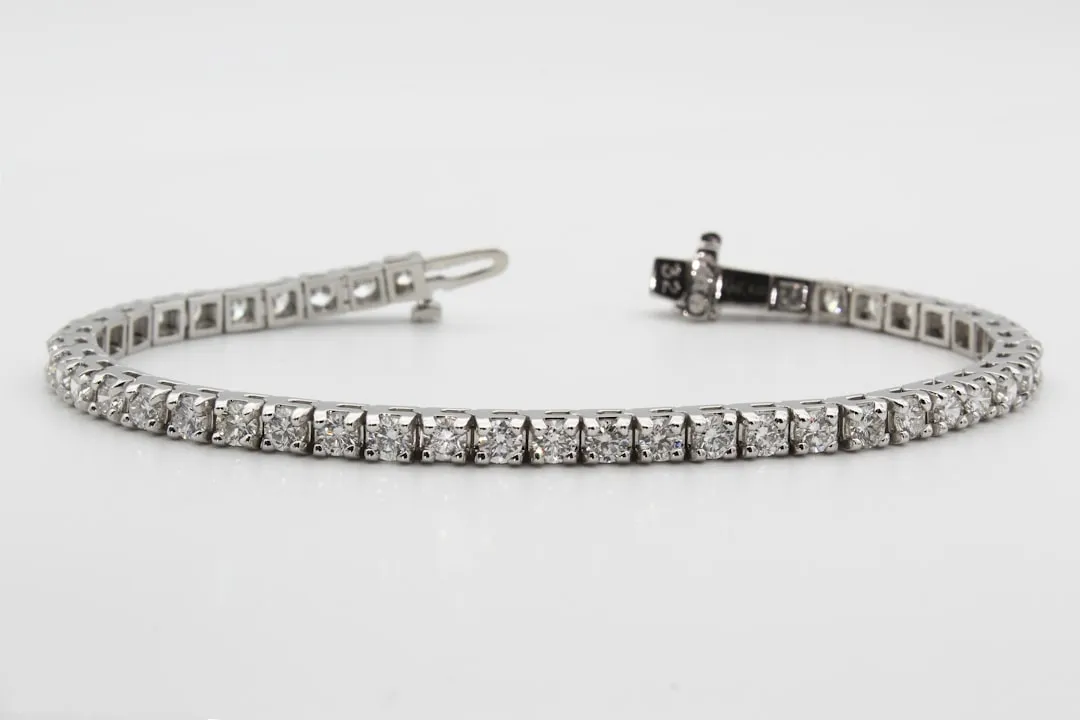
Tennis bracelet cost usually feels confusing for one simple reason: you’re not paying for “a bracelet,” you’re paying for a specific lineup of diamonds, a specific metal, and the workmanship that keeps it all on your wrist day after day. I’m Zak, the founder of Quantum Qarat here in Phoenix, and when you ask me what a tennis bracelet costs, my first move is to slow things down and figure out what kind of bracelet you actually want to live with.
You’ll see prices that start around $100 for sterling silver fashion pieces with tiny stones, and you’ll also see high-carat natural diamond bracelets in platinum that climb well into five figures and beyond. That spread is real. The goal is not to chase a number. The goal is to land on the right combination of carat weight, diamond type, and metal so you’re not overpaying for specs you won’t notice, or underbuying the parts that matter for daily wear.
Tennis bracelet cost: the 5 things that change the number fast
When two bracelets look “basically the same” in a photo but the prices are miles apart, it’s almost always one of these. Keep this short list in your head and you’ll compare options like a pro.
- Total carat weight (TCW): the combined weight of all diamonds. More TCW usually means more cost, more coverage, and more sparkle from a distance.
- Diamond type: natural versus lab-grown. Same look, very different pricing in most cases.
- Diamond quality: cut, color, and clarity still steer how bright and “clean” the line looks on your wrist.
- Metal choice: sterling silver, 10K, 14K, 18K, and platinum don’t just cost different, they also wear different.
- Build details: link construction, prong style, finishing, and clasp design. This is where “cheap” can get expensive later.
Tennis bracelet cost guide by carat weight (natural vs. lab-grown)
If you want a fast way to orient yourself, start with TCW. It’s not perfect, but it’s the clearest indicator of how bold the bracelet will look and what budget ballpark you’re stepping into. Many market roundups put tennis bracelets broadly in the $1,000 to $20,000+ range depending on size and specs, and you can see a general overview of that range in the pricing breakdown from Frost NYC’s tennis bracelet cost guide.
Here’s the kind of “real life” range I talk through with clients. It assumes typical bracelet lengths and mainstream quality grades. Better color, cleaner clarity, heavier metal, and better craftsmanship can push the price up, sometimes quickly.
| Total Carat Weight | Natural Diamonds (Typical Range) | Lab-Grown Diamonds (Typical Range) | What It’s Usually Best For |
|---|---|---|---|
| 1 to 2 TCW | $1,500 to $5,000 | $500 to $1,500 | Everyday wear, gifting, first tennis bracelet |
| 3 to 5 TCW | $5,000 to $12,000 | $2,000 to $6,000 | Noticeable wrist coverage, dressy but wearable |
| 6 to 7 TCW | $6,995 to $15,000 | $4,000 to $10,000 | Luxury everyday look with strong presence |
| 10 TCW | $16,000+ | $8,000 to $18,000+ | Statement piece, milestone purchase |
| 15+ TCW | $50,000 and up | $20,000 and up | High jewelry, heirloom tier |
Once you get into bigger total weights, tiny differences in specs stop being “tiny.” A good example is the guidance around 10-carat bracelets, where pricing can start in the mid five figures depending on diamond details and setting. If you want that perspective, read Sotheby’s 10-carat tennis bracelet buying guide.
Tennis bracelet cost by metal: silver vs 10K, 14K, 18K, platinum
Metal is the part people don’t think about until they’ve worn a bracelet for six months. Then it becomes the only thing they think about. Some metals scratch easier, some need plating, some feel heavier, some hold prongs better. And yes, the metal choice can swing the price by hundreds or thousands even with the exact same diamonds.
- Sterling silver: usually the lowest entry price. I see these as “fun and occasional.” If you’re tough on jewelry, silver can be a little high-maintenance.
- 10K gold: a solid value pick if you want real gold and strong durability. It’s a practical choice, especially for daily wear.
- 14K gold: the classic sweet spot. Good strength, great look, and usually the best balance of cost and longevity.
- 18K gold: richer gold content and a more luxurious feel, with a higher price tag.
- Platinum: naturally white, dense, premium. If you want heirloom durability and you like a slightly weightier feel, platinum is hard to beat.
If you’re trying to decide between 10K, 14K, and 18K, I wrote a plain-English comparison that’ll save you time at 10K vs 14K vs 18K gold. And if your shortlist is white gold versus platinum, it helps to understand the upkeep and color over time. I break that down here: rhodium plating vs platinum for white metals.
How much is a diamond tennis bracelet: natural vs lab-grown diamonds
This is where modern shopping gets interesting. Lab-grown diamonds are real diamonds by chemistry and optics, but they usually cost a lot less than natural diamonds at the same size and appearance. In many current comparisons, lab-grown pricing can land roughly 50 to 70 percent below natural, which is why you’ll see someone wearing a bold 4 or 5 TCW look that would have been out of reach a few years ago.
If you like seeing how entry pricing and lab choices shift the budget, Diamond Nexus’ tennis bracelet pricing overview is a useful reference point. In my studio, I keep it simple and I ask you this:
- Do you want maximum size for the budget? Lab-grown tends to win here.
- Do you care about natural rarity and traditional long-term collectability? Natural may fit your goals better.
- Do you want worry-free wear? Then your focus should shift to build quality and clasp security, regardless of diamond type.
Quick side note from the bench: people obsess over lab vs natural and then ignore the clasp. Please don’t. A tennis bracelet is only “a deal” if you still have it next year.
Tennis bracelet cost and diamond quality: what actually shows on the wrist
You can absolutely feel the difference between a well-matched, well-cut line of diamonds and a bracelet that’s been pieced together from mixed leftovers. Tennis bracelets put every diamond shoulder-to-shoulder, so consistency is the whole game. One noticeably warm stone or one cloudy stone can break the clean “line of light.”
For a deeper educational baseline, Diamonds.pro’s tennis bracelet guide explains how quality levels affect price and why better specs ramp up quickly. In day-to-day design work, I usually steer you toward balanced ranges that look great in real lighting, like:
- Cut: prioritize it. Even small diamonds pop more when they’re cut well.
- Color: G to H is a common “bright but sensible” range in white metals. If you love yellow gold, you can often go a touch warmer and still look fantastic.
- Clarity: SI to VS is often the comfort zone. You get a clean look without paying for microscopic perfection.
- Matching: I’d rather give you slightly lower grades that match perfectly than a mixed lineup with a few “better” stones that don’t blend.
What a good deal looks like (without chasing the cheapest price)
Most buyers aren’t trying to win a bargain hunt. You want the bracelet that makes sense for your life. Here’s how I think about value tiers when you’re comparing options or building custom.
Tennis bracelet cost under $2,000: the smart entry lane
Under $2,000, lab-grown diamonds in gold tend to deliver the most satisfying result. You get the classic tennis bracelet look without cutting corners on the important parts. Silver options exist, but you’ll want to be extra picky about link strength and clasp design.
- Best value: lab-grown diamonds in 10K or 14K gold
- What to aim for: around 1 to 2 TCW with a secure clasp
- Style tip: smaller stones look clean and refined, and they stack well with a watch
Tennis bracelet cost $2,000 to $10,000: everyday luxury territory
This is the range I see most often for natural diamonds in 14K gold. You can build something that looks substantial, wears comfortably, and doesn’t require you to pay top-tier premiums for specs you’ll never notice.
- Typical target: 2 to 5 TCW natural diamonds in 14K gold
- Upgrades worth it: double safety clasp, strong settings, better matching
Tennis bracelet cost $10,000+: high-carat looks and heirloom builds
Over $10,000, you’re usually increasing size, improving diamond quality, moving into 18K or platinum, or doing all three. This is also where documentation and service support start to matter more, especially if you’re thinking long-term value.
- Typical target: 7+ TCW, improved color and clarity, and/or platinum
- Worth considering: stronger clasps, higher-end finishing, and clear diamond specs
How you and I build the right tennis bracelet at Quantum Qarat
If you’re the kind of person who notices fit, comfort, and the way a piece moves, custom is often the best route. It lets you control the bracelet length, diamond matching, and the “feel” on your wrist. If you want to get familiar with how I source and think about diamonds before you choose a direction, start here: Diamonds and diamond jewelry at Quantum Qarat.
If you decide you want something made for you from scratch, you can see the full process from consultation to delivery at our custom jewelry page. And if you already have a bracelet that needs a clasp upgrade, tightening, or a stone check, you’ll find our repair and care options at Quantum Qarat services. Keeping a tennis bracelet in good shape is not complicated, but it does need the occasional once-over. A quick check now beats a missing diamond later. That’s just the truth.
Before you buy: 7 questions you should ask about tennis bracelet cost
Whether you’re buying online or working with a jeweler, these questions keep you from paying premium money for vague specs.
- What is the exact total carat weight (TCW)? “About 3 carats” is not a spec.
- Are the diamonds natural or lab-grown? Get it in writing.
- What are the color and clarity ranges? “Near colorless” is too fuzzy to compare.
- Are the diamonds matched? You want a consistent look across the whole line.
- What metal and what karat? White gold and platinum are not interchangeable.
- How secure is the clasp? Look for a safety latch if you wear it often.
- What service comes with it? Prong checks and repairs should be straightforward, not a fight.
FAQ: tennis bracelet cost, value, and buying tips
What is the average tennis bracelet cost?
Most everyday buyers end up around $2,000 to $15,000 depending on TCW, diamond type, and metal. A 2 TCW bracelet and a 7 TCW bracelet are both “tennis bracelets,” but they’re not the same purchase.
How much is a diamond tennis bracelet in 14K gold?
In 14K gold, a natural diamond bracelet around 1 to 2 TCW often falls roughly in the $1,500 to $5,000 range. A 3 to 5 TCW version commonly runs about $5,000 to $12,000, depending on diamond quality and build. Lab-grown versions are typically much less at the same size.
Is platinum worth it for a tennis bracelet?
Platinum is worth it if you want a naturally white metal, excellent long-term durability, and an heirloom feel. The tradeoff is higher upfront cost and more weight. If you like a bright white look at a lower price, white gold can be a great option with periodic rhodium upkeep.
Do lab-grown diamond tennis bracelets hold value?
Lab-grown bracelets usually win on visual value per dollar. Resale is different than natural diamonds because lab supply is scalable and pricing can move over time. If long-term collectability is a top priority, natural diamonds often align better. If daily wear enjoyment is the priority, lab-grown can be a great call.
What specs should I prioritize for the best sparkle?
Prioritize cut quality and matching first, then pick a color and clarity range that looks clean to the eye. If you want a simple rule: don’t overpay for grades you can’t see, and don’t underpay on craftsmanship you’ll rely on every day.
Conclusion: choose the tennis bracelet cost that fits your life
The “right” tennis bracelet cost is the one that buys you a bracelet you’ll actually wear. Start with total carat weight, decide between natural and lab-grown, then choose a metal that matches how you live and how often you want maintenance. From there, dial in diamond quality so the line looks bright and consistent without paying for bragging rights you’ll never notice.
If you want help sorting options, send me what you’re considering and I’ll tell you what I’d change, what I’d keep, and where you’re getting real value. And yes, if you spot a bracelet you love but the clasp feels a little… sketchy, we’ll talk. I’ve seen too many “great deals” turn into disappointing repairs.